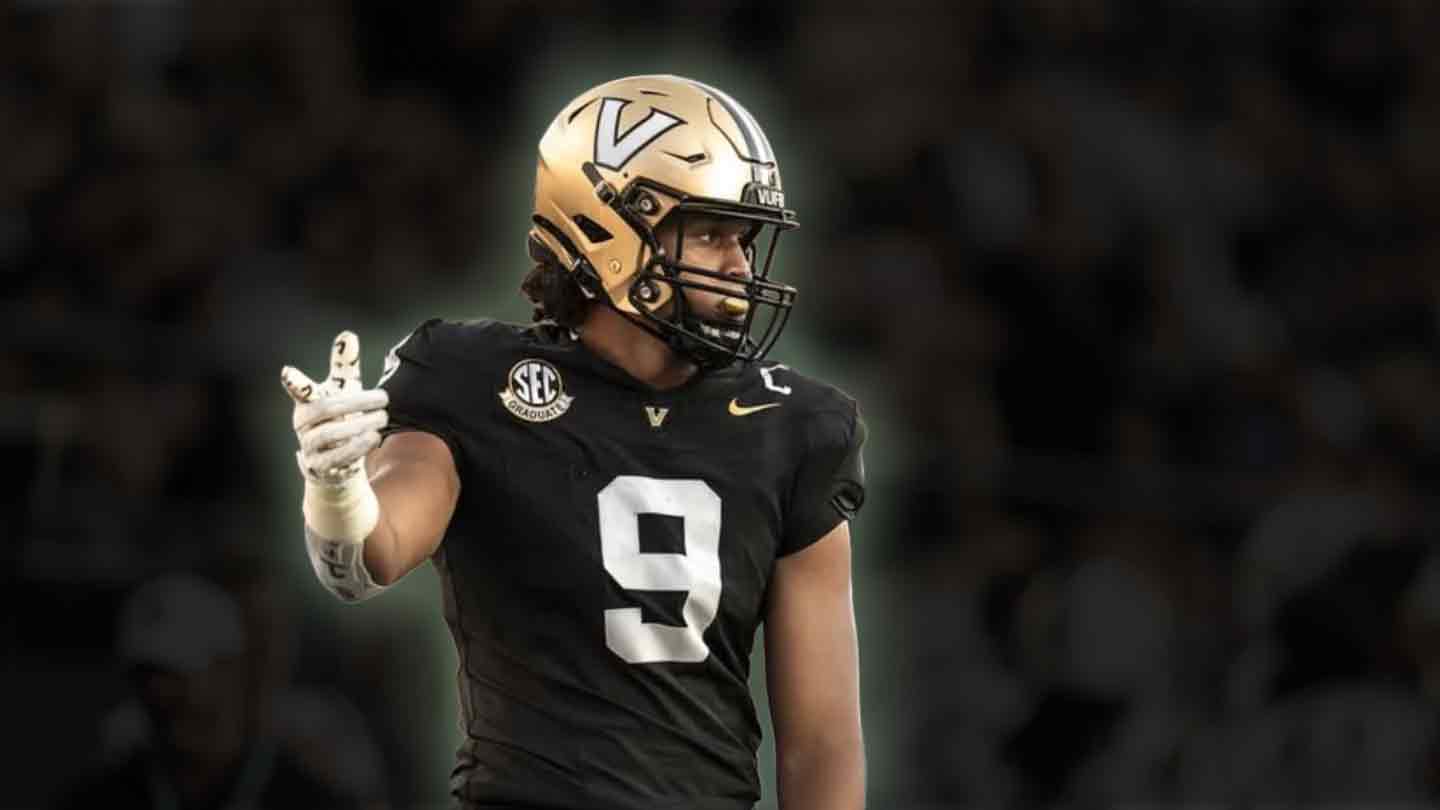
Eli Stowers has been one of the nation’s most productive playmakers at the tight end position over the past two seasons, helping Diego Pavia spearhead a renaissance for Vanderbilt’s football program. There is a lot to like in isolation about his talent as a pass-catcher but a lack of blocking ability makes his path to a starting role a narrow one.
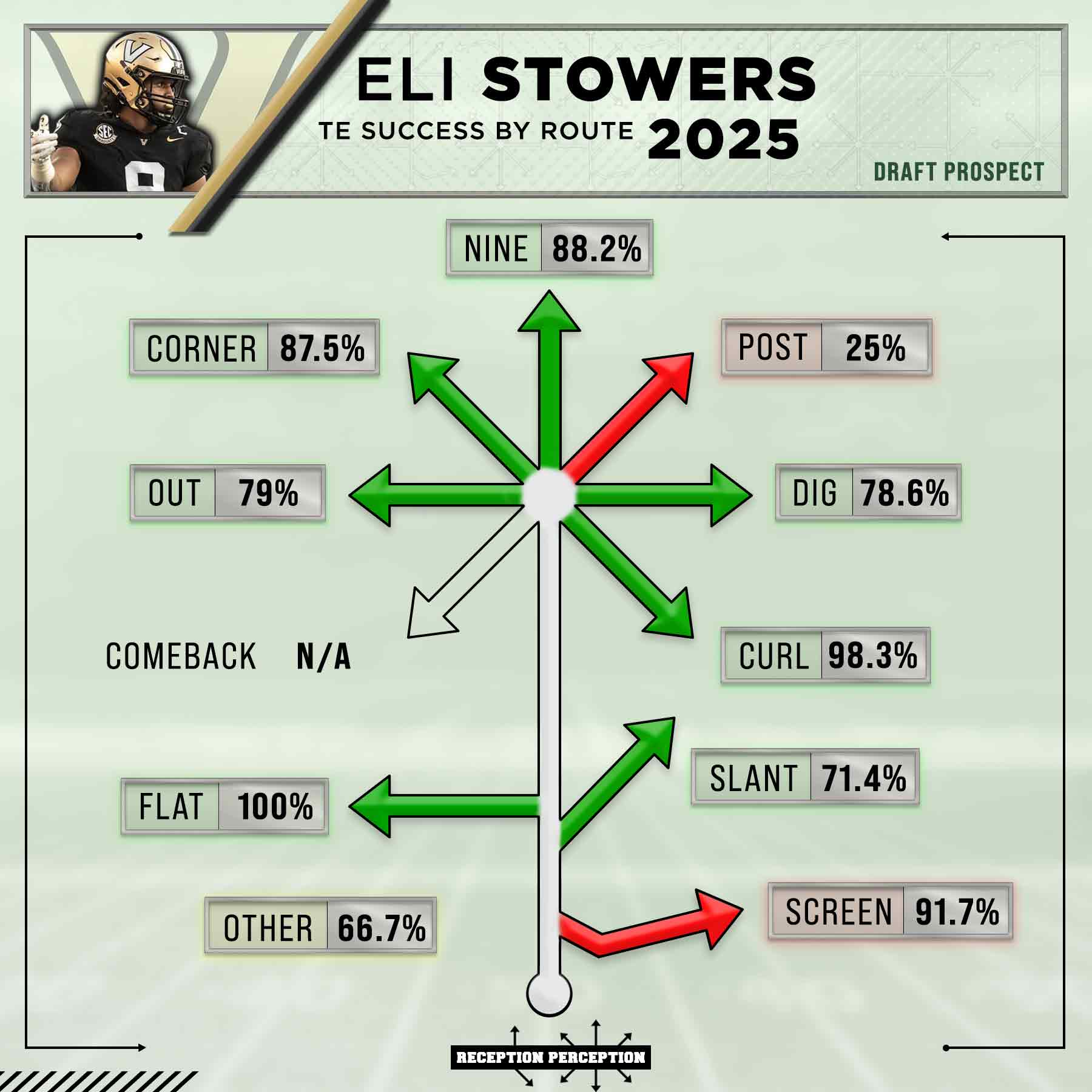
Success Rate by Route
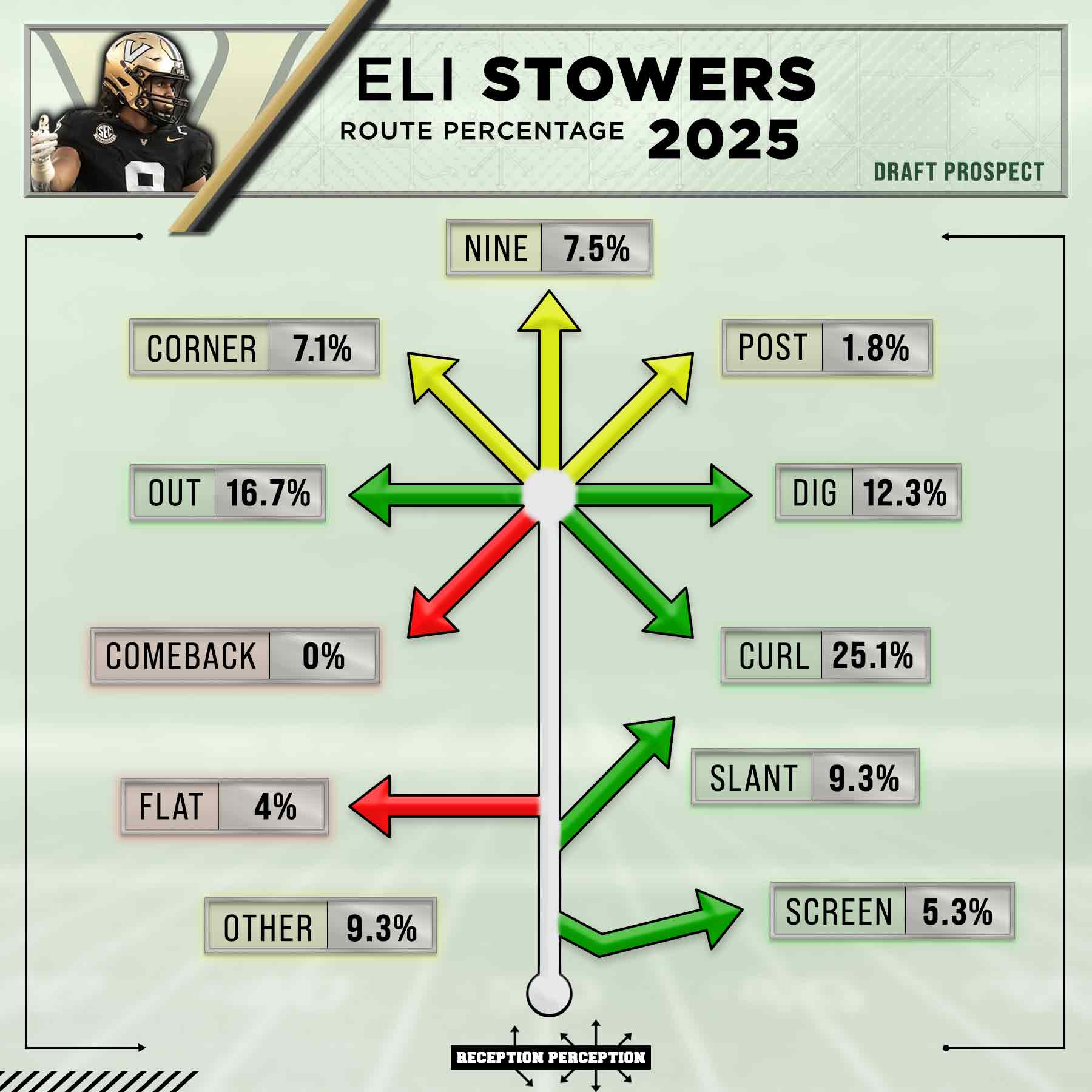
Route Percentage
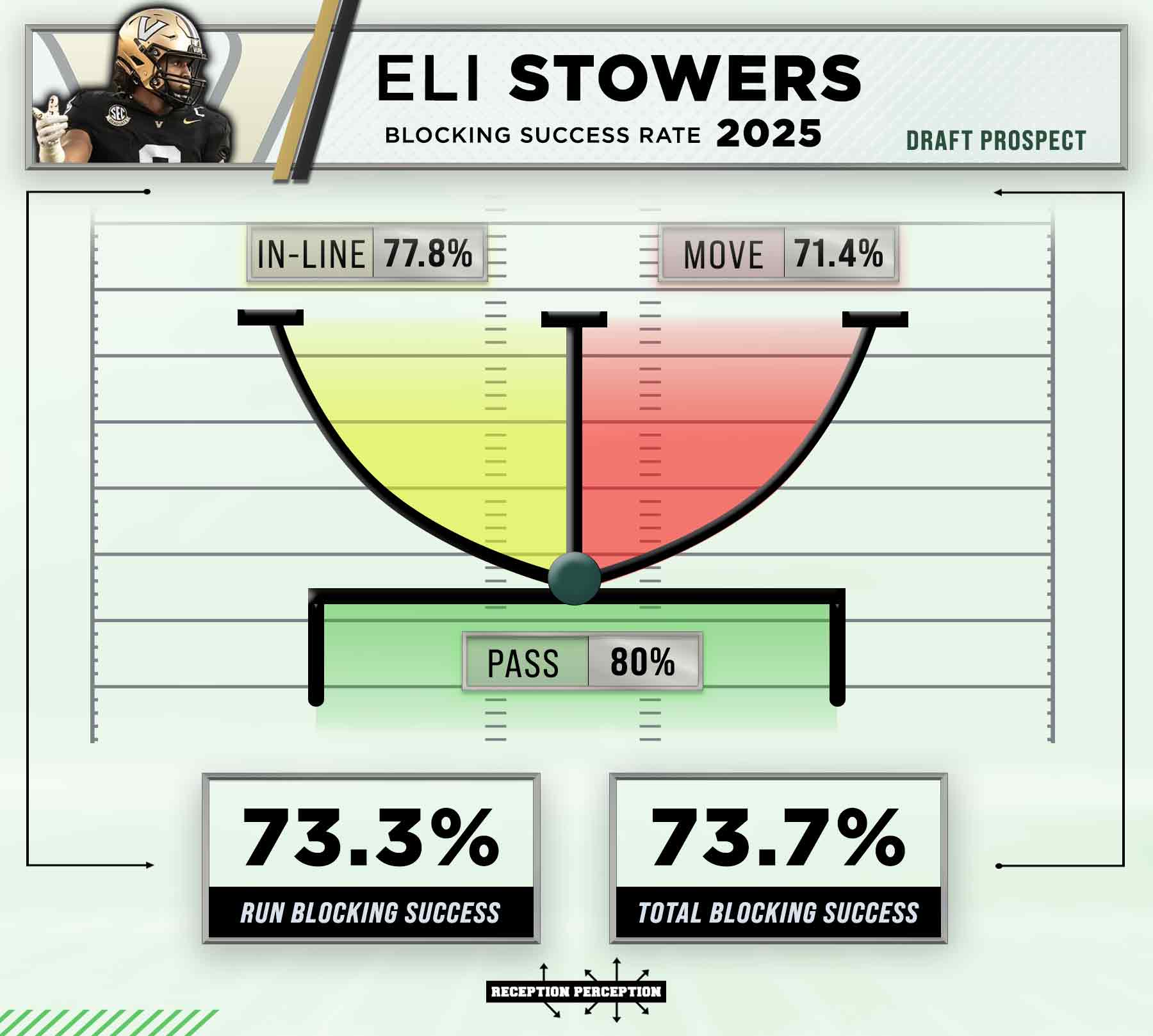
Blocking Success Rate
Stowers’ physical reputation preceded his excellent performance at the combine. At 6-foot-4, 239 pounds, Stowers ran an impressive 4.51 40-yard dash and posted an absolutely ridiculous 45.5 inch vertical. His vertical was not only the highest of all the players in 2025, it’s just a half-inch off the all time record. Not among tight ends (he easily owns that record) but among all players. In 2005, Gerald Sensabaugh, a 212 pound safety, posted a 46-inch vertical. Again, Stowers is 239 pounds…
So yes, Stowers is obviously a fast and explosive raw athlete but he also happens to fall into the proverbial “good at football” bucket. The converted quarterback won the Mackey Award in 2025 as the nation’s most outstanding tight end. The smoothness of his position change at the college level and alignment versatility as a route runner are nothing short of special.
The underneath and intermediate areas are Stowers’ kingdom. He racked up a scintillating 91.73% overall success rate against zone. He has a more seasoned feel for space than he has any right to so early into his new positional life. Not to compare him to such a lofty figure, but such zone acumen has allowed Travis Kelce to remain useful even as his athleticism declines to a more human level.
This explains such robust usage on curl-type routes; they represent a quarter of his charted route sample. He did his job well on virtually all of them, posting an absurd 98.25% success rate. In addition, he’s a consistent target getter against zone looks on shorter out-breakers like sticks and speed outs. These took a big chunk of his sample and success as well. These figures respectively shake out to 16.74% and 78.95%.
Stowers commands the space behind the linebackers just as well as the space between them. He maximizes dig windows and makes himself very available on in-breakers. He also has some vertical juice when given the right matchup and can win you a chunk on a deep corner or fade if you can isolate it. His terrific success rate on nine routes (88.2%) largely came on the seams where his spatial awareness and leaping ability combined to yield maximum results.
The blocking was a very different story though. There is no way to project the Eli Stowers that exists today into an every-down NFL role because of his blocking. And I’m not the only one who thinks this, his coaches at Vanderbilt must have felt similarly because they frequently took Stowers off the field for true 11 personnel snaps in situations that were not obvious passing downs.
There were also heavy personnel packages that excluded him for better off-ball blockers. That’s concerning as these types of players typically stay out there in heavy personnel for the less-demanding blocking role. Just 27 of his blocking snaps came in this capacity. Vanderbilt limited them to situations in which they could expect he would not need to block the DE or could run away from his side. Stowers is simply not viable in-line.
As a move blocker, he was hit or miss despite the simpler assignments. His size and strength are an obvious non-starter in-line but there needs to be more physicality blocking on the move. Without improvement, he runs the risk of continuing to lose snaps in that capacity.
This is where the projection becomes interesting. Stowers is effective against man coverage at 73.6%, with the caveat that much of that success came at the Y in passing situations. He is clearly a tough draw for a linebacker or safety but has issues separating in a true slot or outside role against a more serious coverage defender. Brock Bowers is the common comparison, but in college he handled a slot role with aplomb as Darnell Washington held down the Y.
Stowers is not on that level as a move tight end despite great testing. He lacks the precise deceleration that lighter players or generational TE’s enjoy that allows them to play on the perimeter more consistently. The nice thing for a tight end about sometimes moving to the slot or outside is that the situations can be cherry-picked. You don’t need a real repertoire out there because you aren’t going to live there. If Stowers is going to command an every-down role without blocking in-line, that is what he’ll need to do. Unless he were to lose some mass and try to become almost like a Jauan Jennings, that’s not going to fly.
There is still plenty of capability in this player. In many ways, he is akin to a Taysom Hill with genuine route-running upside. It’s tough to use a premium pick on a third-down weapon and standard down gadget guy.
But that value proposition changes when the draft inches toward the beginning of day three. Mike Gesicki’s role with the Bengals as fourth WR and third-down TE seems like a natural fit for Stowers if he stays as “tweener.” A move down in weight and into the slot could be more profitable for this zone-surgeon and overall talented ballplayer.